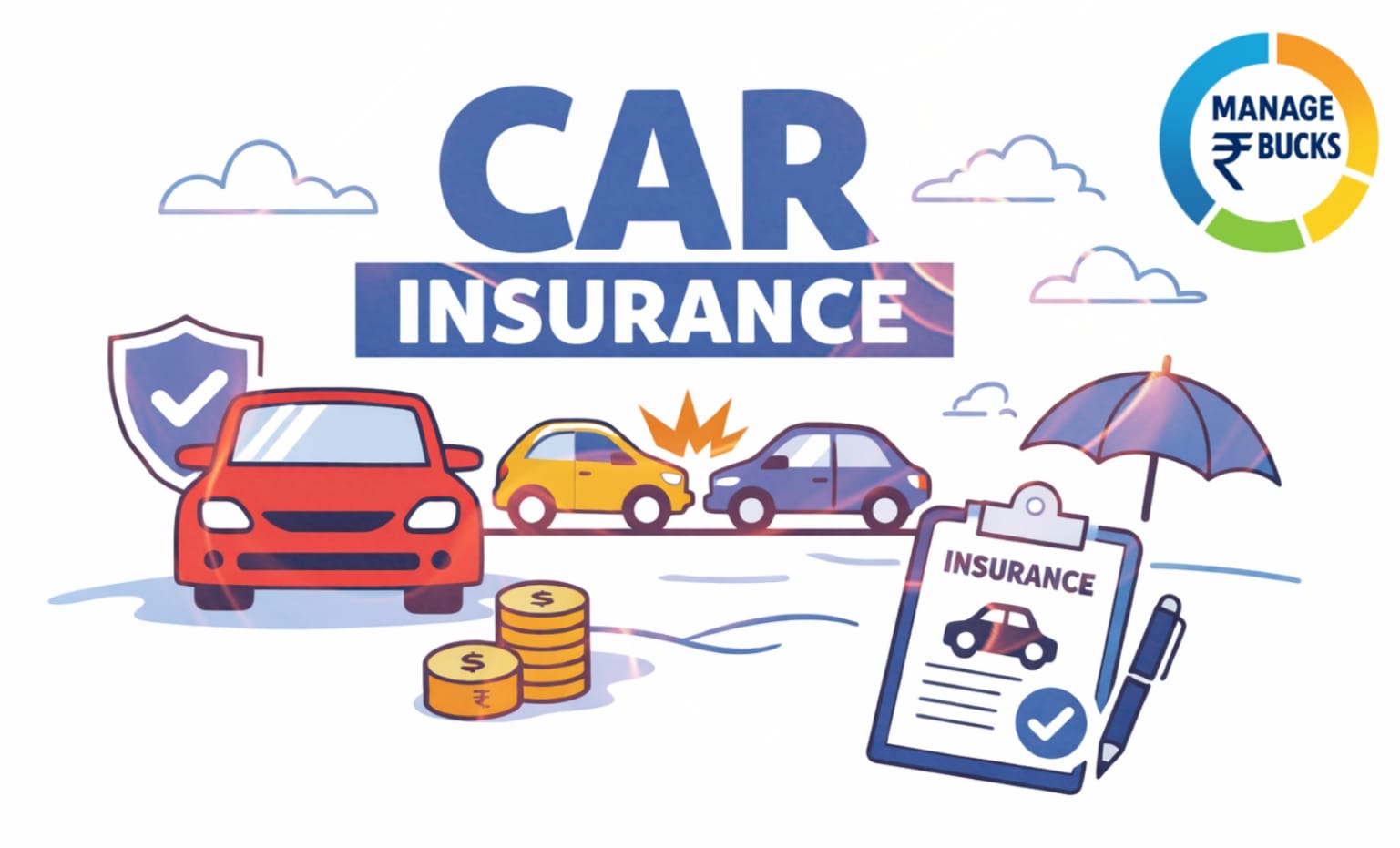
Car Insurance helps provide you financial protection when unexpected problems happen to your Car, such as Accidents, Damage and Theft. Car insurance is mandatory in India. In this guide, we will explain what is Car Insurance, Types, Benefits and Coverage.
What is Car Insurance?
Car Insurance is a type of contract where you pay a premium, and in return, the Company financially protects (according to terms and conditions) you for damage to your Car. This insurance is a safety cover for your Car and your Money. This insurance also helps you cover the costs if your car causes injury or damage to another person’s Vehicle, Shop and Property.
Types of Car Insurance
In India, Car Insurance is mainly of three types, which can be easily understood as follows:
1. Third-Party Insurance
- This is basic and essential Insurance that every Car should have.
- This covers damage to someone else’s car, property or injuries/death to another person. Damage to your own Car is not covered.
2. Own-Damage Insurance
- This covers damage to your own Car due to incidents such as Accidents, Fire, Theft or Natural and Man-Made Disasters etc.
- You also need to purchase Third-Party Insurance with it.
3. Comprehensive Insurance
- This is the most popular and recommended Insurance.
- This Insurance combines both Third-Party and Own Damage coverage. This means it covers damage to both your car and the other party.
Benefits/Advantages of Car Insurance
Car insurance offers many Benefits/Advantages that protect both your Car and Money. Here are main Benefits/Advantages of Car Insurance explained in easy way:
- Saves Money – This helps to cover the large expenses incurred after a Car Accident or Damage, saving you from having to pay out of your own pocket.
- Legal Protection – Car insurance is mandatory in India. Driving without Insurance can result in fines or legal action.
- Protection against Theft – If your car is stolen, this helps compensate you for your losses.
- Protection against Natural Disasters – This helps you cover losses caused by Natural Disasters such as Floods, Earthquakes, Fires and other Natural Disasters.
- Peace of Mind – You can drive stress-free knowing that your car is financially secure.
- Cashless Facility – Mostly Insurance Companies offer cashless facilities, which means you don’t need to pay upfront for repairs at the garage.
- No Claim Bonus (NCB) – If you don’t make any claims throughout the year, you get a discount on your premium the next time, which makes the policy cheaper in subsequent years.
Common Car Insurance Add-ons
Add-ons are a type of extra protection that you can add to your Insurance Policy by paying a little extra premium. Here we can learn about some of the main add-ons:
1. Zero Depreciation Cover
The insurance company pays for the entire repair cost; you only have to pay the file charge.
2. Roadside Assistance
This helps you if your car breaks down on the road, providing services like Battery help, Fuel & Towing etc.
3. Engine Protection Cover
It helps with the payment for Engine Damage, especially due to water or flooding.
4. Return to Invoice
If your Car is stolen or totally damaged, this will cover the full purchase value of your Car.
5. Personal Accident Cover
A fixed amount is paid to the owner, driver, or passenger (according to Policy) in case of injury, disability, or death in an Accident.
6. Consumables Cover
It covers small items such as Engine Oil, Screws, Coolant and Nuts etc.
7. Key Protection Cover
Payment in case of lost or damaged Car Keys.
8. Tyre Protection
Covers Tyre repair or replacement due to cuts or damage.
Mistakes to avoid while making a Car Insurance Claim
When filing a Car Insurance claim, you should be aware of certain mistakes that could lead to your claim being rejected. Here are some common mistakes:
- Delaying Claim Intimation – Insurance companies may reject claims due to “Late Intimation” if they are not informed on time.
- Not informing Police if required – In cases of car theft or major accidents, it is necessary to inform the Police. Failure to do so may result in your claim being rejected.
- Wrong or Incomplete Information – Providing incorrect or incomplete information about the location of the accident, the driver’s identity, the speed or how the accident occurred can lead to your claim being rejected.
- Repairing the Car before Inspection – Do not get your car repaired until the insurance surveyor has inspected it.
- Drink and Drive – Driving under the influence of alcohol or drugs can result in your insurance claim being rejected.
- Driving without Valid Documents – If you don’t have valid documents while driving, your insurance claim may be rejected.
- Driving against the Policy – If you have a private car insurance policy and you are using your car for commercial purposes, your claim may be rejected.