Personal loans are one of the most popular financial options for Indian consumers. They are used for household repairs, weddings, travel, medical expenses, debt repayment, and other personal financial needs because they provide quick access to funds.
In this complete guide, you’ll learn about personal loans, their meaning, features, benefits, types, eligibility, required documents, and important things to consider before applying.
What is Personal Loan?
A personal loan is an unsecured loan offered by banks, NBFCs (non-banking financial companies), or digital lenders. This means you don’t need to pledge any collateral, such as property, gold, or a vehicle.
Because there’s no collateral involved, lenders assess your eligibility based primarily on your income, credit score, job stability, and existing debt. This is why personal loans typically carry higher interest rates than secured loans like home or gold loans.
Key Features of a Personal Loan
1. No need for collateral or security: Personal loans are unsecured, meaning you do not need to pledge any assets to obtain the loan.
2. Quick loan approval: These loans are approved faster compared to other types of loans. Many lenders approve applications within a few hours and can disburse the loan amount on the same day.
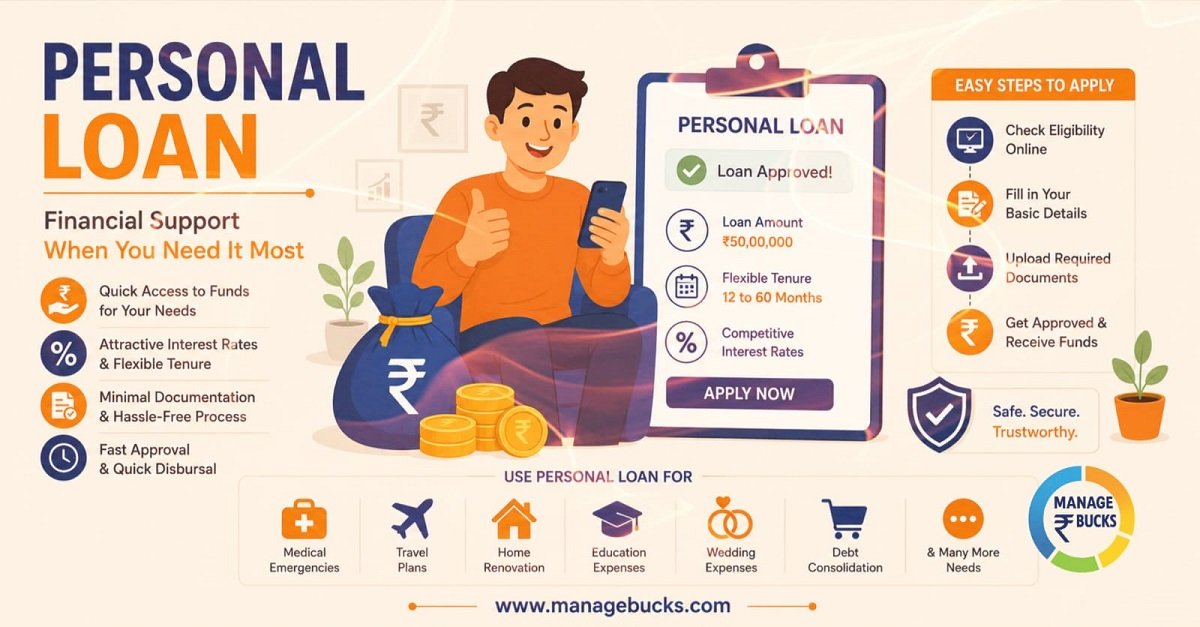
3. Flexibility in loan amount: Depending on your eligibility, lenders can offer loans ranging from ₹10,000 to ₹50 lakh or even more.
4. Flexibility in repayment tenure: The repayment tenure typically ranges from 12 to 60 months, depending on the lender and the loan amount.
5. Fixed EMI: Most personal loans come with a fixed interest rate, meaning your EMI (monthly installment) remains constant throughout the loan tenure.
6. Competitive interest rates: Interest rates may vary based on your credit profile, income, and the lender’s policies.
7. Minimal paperwork: The documentation process is much simpler compared to secured loans—usually, only KYC documents, proof of income, and bank statements are required.
Benefits of Personal Loans
- No collateral required: You do not need to pledge assets like your home, car, or savings to secure the loan.
- Quick processing: Ideal for emergencies, as approval and disbursement can happen within a day or two—especially with pre-approved offers.
- Flexibility of use: Unlike car or home loans, there are no restrictions on how you spend the funds.
- Improves credit mix: Responsibly repaying an unsecured loan can help improve your credit score over time.
- Debt consolidation: You can use a personal loan to pay off multiple high-interest debts (such as credit card dues) and combine them into a single, manageable EMI.
- Predictable repayment: Fixed EMIs make it easier to plan your monthly budget and expenses.
Types of Personal Loan
Not all personal loans are the same — lenders often customize them based on the borrower’s needs or profile. Some common types available in India are:
1. Standard Personal Loan: This is the most common type, used for general purposes like wedding, travel or emergency and there are no restrictions on its usage.
2. Medical Loan: This is especially offered to meet the expenses of hospital bills, surgery or treatment and the loan amount is often available quickly.
3. Travel Loan: This is designed to finance holidays, honeymoon trips or foreign travel expenses; Sometimes travel related offers are also available with it.
4. Wedding Loan: This is customized to cover wedding expenses like venue booking, catering and jewelery and usually has a higher loan amount.
5. Debt Consolidation Loan: This is used to consolidate multiple existing debts (e.g. credit cards, other loans) into a single loan with a single EMI and often a lower overall interest rate.
6. Home renovation loan: The purpose is to repair, remodel or furnish the home without going through the lengthy process of getting a home improvement loan.
7. Consumer Durable Loan: It is used to buy electronics or household items (like fridge, washing machine etc.).
8. Festival Loan: It is designed to meet the expenses of the festival season.
9. Personal Loan for the Self-Employed: Designed for business owners and professionals; the eligibility criteria are based on business income, ITR filing and turnover rather than salary slips.
10. Pre-Approved Personal Loan: This is offered to existing bank customers who have a good repayment record; there is often very little documentation required and the loan is available immediately.
Eligibility Criteria for Personal Loan
Although eligibility varies by lender, general requirements include:
- Age between 21 to 60 years
- Indian resident
- stable source of income
- Good credit score (usually 700 or higher)
- regular employment or business income
- satisfactory repayment history
Documents Required
Commonly required documents include:
- Aadhaar Card
- PAN Card
- Passport-size photograph
- Address proof
- Salary slips (last 3–6 months)
- Bank statements
- Form 16 or Income Tax Returns (for self-employed applicants)
Tips to Increase Your Chances of Personal Loan Approval
- Maintain a credit score above 750.
- Keep your debt-to-income ratio low.
- Avoid multiple loan applications in a short period.
- Submit complete and accurate documentation.
- Maintain steady employment or consistent business income.
- Choose a loan amount that matches your repayment capacity.
Things to keep in mind before taking a personal loan
- Before applying, check the interest rates of various lenders along with processing fees, GST, prepayment and late payment charges.
- Read the loan agreement or all terms and conditions carefully.
- Check prepayment or foreclosure charges if you want to close the loan early
- Borrow only what you need – remember, it’s still a loan with interest attached
- Use our EMI calculator to understand your monthly repayment burden before committing.
Frequently Asked Questions (FAQ)
Is personal loan secured or unsecured?
A personal loan is generally an unsecured loan, so no collateral is required.
Can I use the personal loan for any purpose?
Yes. Most lenders allow borrowers to use personal loans for any legal personal expenses.
What is the ideal credit score for a personal loan?
A credit score of 750 or higher generally improves your chances of approval and can help you get lower interest rates.
How much time does it take to get a personal loan approved?
Many lenders approve loans within a few hours, while disbursement can happen the same day or within 1-2 business days.
Can self-employed individuals get personal loans?
Yes. Banks and NBFCs offer personal loans to eligible self-employed professionals and business owners based on their income and credit profile.
Conclusion
If a personal loan is to be used in the right circumstances then it is very useful especially when there is a need to spend or to earn money for any major emergency in life or to benefit from loan repayment. Before applying, always compare offers from multiple lenders and check your credit score to get the best possible interest rate.